
Basement Seepage Waterproofing Services in Indore - Retaining Walls & Injection Grouting
Vishwas Homes provides professional basement seepage waterproofing services in Indore, specialising in polyurethane injection grouting for active cracks, negative-side crystalline waterproofing for retaining walls, and floor slab seepage control. Serving Palasia, Saket, AB Road, and all Indore with certified applicators and a written 2–5 year warranty. Free structural site assessment - WhatsApp 070672 58993.
Complete Basement Waterproofing Solutions
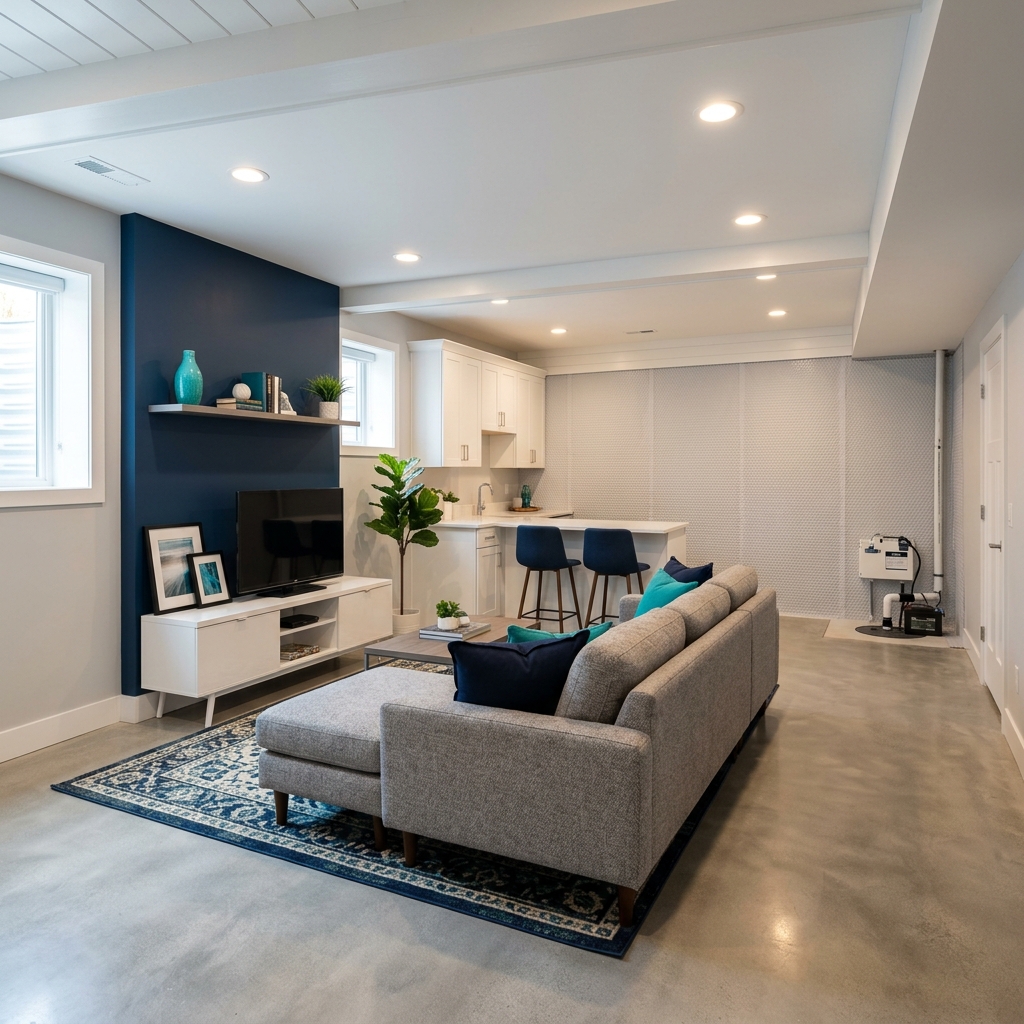
"At Vishwas Homes, we begin every basement seepage assessment with a structural survey. We do not apply surface slurry to active seepage and call it waterproofing."
The Anatomy of Basement Seepage in Indore
Imagine this: A bungalow owner in Saket built a basement-level home theatre three years ago. The builder applied a waterproofing membrane before pouring the floor slab and plastering the retaining walls. The first monsoon was fine. By the second monsoon, a thin white efflorescence line appeared along the base of the retaining wall. By the third monsoon - this one - there is a visible trickle of water running down one wall after heavy rain, a persistent damp smell, and a dark patch on the floor slab near the base of the wall.
They call the original contractor. He sends a mason who applies a fresh coat of cementitious waterproofing slurry on the interior wall surface. Two weeks later, the slurry has bubbled and detached from the wall in patches. The seepage continues beneath it.
This is not a paint or plaster failure - it is a physics problem. Groundwater surrounding a below-grade structure during monsoon exerts hydrostatic pressure outward from the soil into the concrete wall. A surface coating applied from the inside has no structural resistance to this pressure. The water pushes the coating off the wall because the coating has nothing behind it to bond to. Treating active basement seepage with a surface-applied product from the inside is, mechanically, the wrong direction. The solution must either block the water at the source (outside the wall - positive-side waterproofing, which requires excavation), neutralise it chemically within the wall matrix (crystalline waterproofing), or seal the crack pathway directly under water pressure (polyurethane injection grouting).
At Vishwas Homes, we begin every basement seepage assessment with a structural survey - mapping active crack locations, measuring wall moisture saturation, identifying the water entry points, and assessing whether injection grouting, crystalline treatment, or a combination of both is the appropriate response.
If your basement seepage is related to a failed terrace or ground-floor slab above it, read our terrace waterproofing guide. For general wall dampness issues above ground, see our wall dampness treatment services.
Why Basements Leak Differently from Terraces and Bathrooms
In a terrace or bathroom, gravity is the enemy. In a basement, the enemy is hydrostatic pressure.
In a terrace or bathroom, water sits on a surface and finds cracks to flow through. In a basement or below-grade retaining wall, the outward force exerted by water-saturated soil presses against the exterior face of the wall and floor slab. During Indore's monsoon, when the water table rises and soil adjacent to foundations becomes saturated, this hydrostatic pressure can force water through hairline cracks that would be entirely dry in winter.
A surface coating applied from the inside of the basement is working against this pressure. The hydrostatic force literally pushes the coating off the wall. This is why every cementitious slurry or surface membrane applied to an actively wet basement wall blisters and fails within weeks. The treatment must oppose the pressure from the outside, work within the wall matrix independently of surface adhesion, or mechanically fill and seal the crack under pressure.
Retaining Wall Crack Seepage
Below-grade retaining walls develop cracks through concrete shrinkage, differential settlement, and thermal cycling. Even a 0.2mm hairline crack subjected to hydrostatic pressure becomes an active water pathway during monsoon. The water seeps continuously through the crack face, leaving white mineral deposits (efflorescence) as it evaporates. Standard surface coatings cannot bridge an active, pressure-driven crack.
Floor Slab Seepage & Rising Groundwater
In older localities like Palasia and Saket, the natural water table rises significantly during peak monsoon. Where original construction lacked an adequate sub-slab membrane, groundwater migrates upward through porous concrete floor slabs by capillary action and hydrostatic pressure. This requires excavation, sub-slab injection grouting through drilled holes, or a drainage channel system.
Construction Joint Seepage
Every basement has construction joints where separate concrete pours were joined. These joints are inherently weaker than monolithic concrete. In Indore's monsoon, construction joint seepage typically manifests as a steady line of water running down the wall from a precise horizontal joint. Construction joint seepage responds exceptionally well to PU injection grouting.
Polyurethane Injection Grouting
Polyurethane (PU) injection grouting is a process in which a PU resin is injected under pressure into an active crack in a concrete wall or slab. The resin reacts with water inside the crack, expanding to fill the crack from the inside out, and cures into a flexible, waterproof closed-cell foam or elastomeric mass.
Because the cured material is flexible, it accommodates minor future crack movement without re-opening. Because it is injected under pressure into the crack rather than applied on the surface, it works against hydrostatic pressure rather than being defeated by it.
Why PU Injection Works Where Surface Coatings Fail
Surface coatings have no bonding substrate on an actively wet wall - water between the coating and the concrete prevents adhesion. PU resin, by contrast, is injected into the crack interior, where it bonds to the crack faces as it expands and cures. The treatment is from inside the crack outward, not from the surface inward. The hydrostatic pressure that defeats surface coatings actually assists PU injection - it helps drive the injected resin deeper into the crack network.
What PU Injection Cannot Do
PU injection treats discrete cracks and construction joints where the crack path is defined and accessible. It cannot treat:
- Uniform porosity seepage through saturated concrete (no defined crack - requires crystalline treatment or sub-slab drainage).
- Cracks wider than approximately 10mm (requires structural repair before grouting).
- Seepage from a surface that has been previously coated with a bonded membrane that prevents packer (injection port) drilling access.
- Seepage from the positive (exterior) side only - injection works from the negative (interior) side, which is its advantage but also its limitation when the crack network is entirely closed on the interior face.
The Injection Process Preview
Packers (hollow injection ports) are drilled into the crack at intervals of 150–300mm along its length. The packers are sealed into the drilled holes with quick-setting epoxy.
The PU resin is then injected through each packer in sequence, beginning from the lowest point of the crack and moving upward. The injection pressure is controlled to ensure the resin fills the full depth of the crack without exceeding the concrete's tensile strength.
Book a Free Structural Assessment →Cementitious Coating vs. PU Grouting vs. Crystalline
Our Basement Seepage Assessment and Treatment Process
Structural Site Assessment
Our waterproofing supervisor visits the basement and conducts a systematic assessment: mapping all visible cracks (length, width, orientation - horizontal, vertical, or diagonal), identifying construction joint locations, measuring wall moisture saturation at multiple points with a digital moisture meter, and checking the floor slab for seepage indicators (damp patches, efflorescence deposits, water trails). We also inspect the external perimeter at ground level for surface drainage issues and downpipe discharge points that may be concentrating water against the foundation wall.
Why it matters: Basement seepage is never random - the pattern of cracks and seepage points tells a structural story. Without this map, any treatment is guesswork.
Crack Preparation: Surface Cleaning and Opening
All crack faces are cleaned using a wire brush, compressed air, and a water jet to remove loose concrete, dust, and efflorescence deposits. Hairline cracks are opened slightly using an angle grinder to a V-groove profile to expose the full crack depth. Construction joints are raked out to remove any loose grout or failed previous sealant.
Why it matters: PU resin injected into a crack filled with loose debris or old sealant will not achieve full-depth penetration. The preparation step ensures the resin travels the full length and depth of the crack before curing.
Packer Drilling and Installation
Injection packers (hollow steel or plastic ports) are drilled into the crack at 45-degree angles at intervals of 150–300mm, depending on crack width and estimated depth. The packers are sealed into the drilled holes using quick-setting epoxy mortar and allowed to cure for 30–60 minutes before injection begins.
Why it matters: A 45° angle ensures the packer tip is positioned within the crack body, allowing resin to fill from the inside outward. This detail separates professionally executed injection grouting from contractor shortcuts.
PU Resin Injection
The two-component PU resin is mixed per manufacturer specifications and loaded into a hand-operated or mechanical injection pump. Injection begins from the lowest packer and progresses upward along the crack. Injection pressure is maintained until resin effuses from the adjacent packer, confirming that section of the crack is filled. Each packer is then capped and the next is injected. The full crack length is treated in sequence.
Why it matters: Injection from the lowest point upward ensures that gravity-assisted resin flow assists the process. Monitoring for resin effusion at adjacent packers is the only way to confirm that the crack has been filled.
Crystalline Waterproofing Application (Porous Zones)
After PU injection has cured (minimum 24 hours), all areas of the retaining wall and floor slab showing uniform porosity seepage - without a defined crack - are treated with a crystalline waterproofing compound. The compound is applied to the bare, damp concrete in two coats, maintaining surface moisture to activate the crystalline reaction. The crystalline barrier forms within the concrete matrix over 7–21 days.
Why it matters: PU injection treats defined cracks. Crystalline treatment handles the diffuse porosity seepage. Using only one method without the other leaves an incomplete treatment.
Construction Joint Sealing with Hydrophilic Swelling Strip
At all construction joints, a hydrophilic swelling strip (a bentonite or polyurethane-based rope that expands when wet) is installed into the joint before closing. The joint is then pointed with polymer-modified waterproof mortar and finished with a flexible polyurethane sealant at the surface.
Why it matters: Construction joints are inherently discontinuous in the concrete matrix. The hydrophilic strip provides a primary seal that activates under water pressure - the higher the hydrostatic pressure, the more the strip expands and seals.
Final Inspection, Pressure Test, and Warranty Handover
After all treatment materials have cured (minimum 7 days for crystalline, 24–48 hours for PU resin), we conduct a final inspection of all treated areas under wet conditions - either during rain or using a water test on the external soil side where accessible. Any residual seepage points are re-treated before the warranty document is issued.
Why it matters: A dry inspection after treatment confirms the work was done - a wet test confirms it works. We conduct the wet test before issuing the warranty, not after handing over the site.
Which Basement Waterproofing System Is Right for Your Property?
Scenario A: New Construction Isolated Seepage
New construction basement, first or second monsoon, isolated crack seepage at one or two points, no floor slab dampness.
Likely cause: Concrete shrinkage crack or minor construction joint failure.
Recommended treatment: PU injection grouting at crack locations + construction joint hydrophilic strip + waterproof joint mortar. No full-wall crystalline treatment required.
Scenario B: Aging Retaining Wall
Basement in a 5–15 year old bungalow, multiple seepage points on retaining wall, floor slab shows damp but no puddles, monsoon worsens it significantly.
Likely cause: Combination of crack seepage and wall porosity breakdown.
Recommended treatment: PU injection grouting on all active cracks + full crystalline waterproofing on retaining wall surfaces + construction joint treatment.
Scenario C: Groundwater Upwelling
Older building (pre-2005), floor slab uniformly damp, water entering from floor-wall junction, rising groundwater probable.
Likely cause: Failed or absent sub-slab membrane, high seasonal water table.
Recommended treatment: Sub-slab PU injection through drilled holes at grid spacing + crystalline treatment at floor-wall junction + peripheral drainage channel inside the basement perimeter (draining to a sump pump).
Scenario D: Commercial Basements
Showroom, parking, utility space. Active seepage at multiple wall panels, business-critical space.
Recommended treatment: Same as B or C depending on seepage type, but with an expedited execution schedule to minimise commercial disruption. We can schedule injection grouting on non-business hours (evenings or weekends) for commercial properties.
We provide a consolidated structural assessment report suitable for building insurance claims or landlord-tenant dispute documentation.
Cost of Basement Waterproofing in Indore
Basement waterproofing is priced differently from surface treatments. Because treatment methods depend on structural factors, pricing combines linear metrics for injection grouting with square-foot metrics for crystalline coatings.
For commercial basements - showrooms, parking levels, server rooms - where seepage causes inventory damage, equipment risk, or business closure, the cost of untreated seepage is measured in lost revenue and asset replacement, not just waterproofing material cost. We provide detailed scope documentation for insurance claims and landlord dispute resolution.
Why Vishwas Homes for Basement Waterproofing in Indore
45 Years of Structural Experience (Since 1980)
We have treated basements in Indore's oldest Palasia bungalows and new Vijay Nagar buildings. We know Indore's water table behaviour, seasonal pressure patterns, and specific structural failure modes of both pre-2005 and post-2010 construction.
Specialist Injection Equipment
PU injection grouting requires professional-grade injection pumps that maintain consistent pressure throughout the injection sequence. We use calibrated mechanical injection equipment, not hand syringes that fail to achieve deep crack penetration.
Authorised Asian Paints SmartCare Dealer
All waterproofing materials are sourced directly from our Pipliyahana retail shop and accompanied by a GST-itemised material manifest. You receive product code confirmation, ensuring absolute material authenticity.
Written 2–5 Year Warranty
Covering both materials and labour. If treated cracks reopen or new seepage appears at treated points within the warranty period, we return and re-treat. Our warranty is backed by 45 years of local presence.
Structural Assessment Report
Every basement project generates a written site assessment report with crack mapping, moisture readings, photographs, and the specified treatment scope. You receive this before work begins.
Commercial Emergency Response
For commercial properties with active seepage in critical spaces, we offer emergency seepage plugging (hydraulic quick-set mortar + temporary PU sealant) to stop active water entry before the full injection grouting treatment is executed.
Maintenance Guide: Protecting a Waterproofed Basement Long-Term
- Annual Pre-Monsoon Inspection: Inspect the basement perimeter wall at the beginning of each pre-monsoon season (April–May). Any new crack wider than 0.3mm that has appeared since the last treatment should be reported before the rains arrive. Early re-injection of a new crack costs a fraction of treating an extended crack network.
- Divert Surface Water: Ensure external surface drainage around the building diverts rainwater away from the foundation. Downpipes that discharge directly against the wall above the basement level concentrate hydrostatic load. Extend them with ground-level discharge pipes.
- Protect the Treated Wall: Do not drill into treated retaining walls for shelving, electrical conduits, or pipe runs without sealing the penetrations with flexible PU sealant. Every drilled hole is a potential water entry point.
- Maintain Sump Pumps: If a sump pump was installed as part of the treatment system, test it monthly during monsoon and service it annually. A failed sump pump turns a managed drainage system into an uncontrolled flood.
- Warranty Checkup: Before your warranty period expires, schedule a free inspection. We assess whether any structural movement has occurred and whether a maintenance injection is warranted before the next monsoon season.
Book a Free Basement Seepage Assessment in Indore
Our waterproofing supervisor visits your basement with injection grouting equipment, a digital moisture meter, and crack mapping tools. You receive a written structural assessment report with crack locations, moisture readings, specified treatment scope, and itemised cost - before committing to any work.
Every monsoon day of active seepage in a below-grade concrete wall increases the chloride infiltration into your structural reinforcement. The waterproofing cost today is a fraction of the structural repair cost in five years.
Commercial property with active basement seepage? We offer same-day emergency seepage plugging followed by a full injection grouting treatment. Mention 'Commercial Emergency' on WhatsApp.
Service Areas: Palasia, Saket, Greater Brajeshwari, Manoramaganj, Vijay Nagar, AB Road, Bypass Road, Pipliyahana, and all Indore.