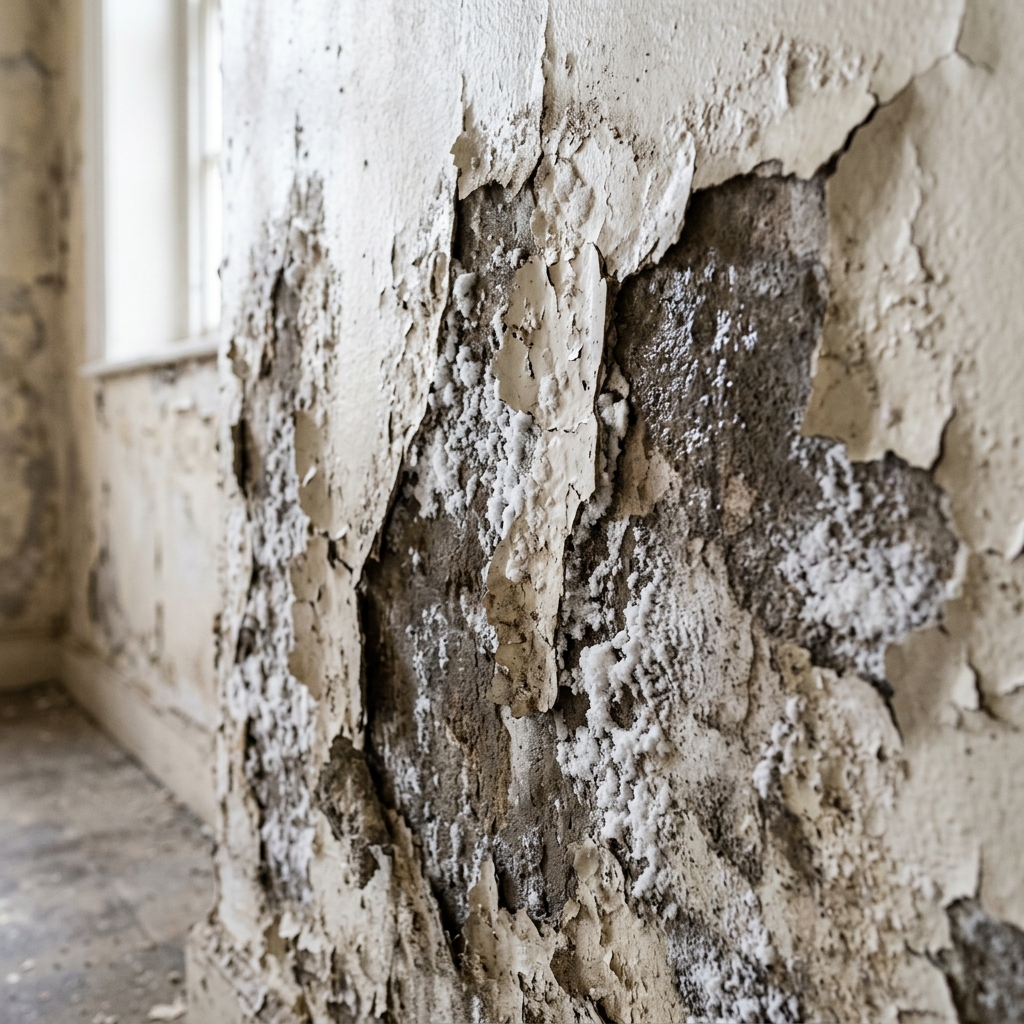
It is a scene almost every Indore homeowner recognises immediately. You have a room repainted just before Diwali-two fresh coats of a premium emulsion over perfectly smooth putty, resulting in a beautiful, flawless finish. By February, a white, powdery crust has subtly appeared at the base of the external-facing wall. By the following monsoon, the paint is bubbling and lifting off in brittle patches. You call the painter, who scrapes off the crust, applies another coat of putty and paint, and leaves. The exact same patch returns the following year, only this time, it is slightly larger.
I have been painting and waterproofing homes in Indore since 1980. In my 45 years in Indore’s painting and waterproofing trade, I have seen shora on every type of wall-new construction in Vijay Nagar, old heritage bungalows in Palasia, ground-floor rooms in Saket, and boundary walls in Greater Brajeshwari. The most common question I hear from frustrated homeowners is always the same: “Maine abhi paint karwaya, phir shora kyun aa gaya?” (I just got it painted, why has the shora come back?). The answer is almost always the same: the shora was never actually treated. The fresh paint was applied on top of the symptom, while the underlying cause was completely ignored.
This guide covers exactly what shora (efflorescence) is, the science of why it keeps coming back, and why Indore’s unique climate makes it so aggressive. More importantly, it provides a complete framework for diagnosing the source of your wall dampness and treating it permanently. Reading this completely will save you from the frustrating, expensive cycle of annual repainting.
What Is Efflorescence (Shora)?
Efflorescence-called shora in Hindi-is the white, powdery or crystalline deposit that appears on brick, concrete, or plastered walls when water moves through the wall material, dissolves soluble salts, and deposits them on the surface as it evaporates. It is a symptom of moisture movement through a wall, not a type of mould or paint defect.
What It Looks Like
Efflorescence presents across a visual spectrum. In its early stages, it looks like a fine white powder on wall indore homes experience frequently. In more advanced stages, it forms thick, hard crystalline crusts that break the paint film. In older buildings constructed with red brick-common across Indore-you might also see brown or yellow mineral staining where iron salts are involved. Shora appears most commonly at the base of walls (indicating rising damp), around window frames (indicating penetrating damp from joint failure), and on terrace parapet walls (where water tracks down from a leaking terrace slab).
What It Is Chemically
The explanation is quite simple, and answers the common question, shora kya hota hai. The materials used to build your walls-cement, brick, mortar, and concrete-contain naturally occurring soluble salts like calcium carbonate, sodium sulphate, and potassium sulphate. When water travels through the wall, whether rising from the ground or entering through an external crack, it acts as a solvent. It dissolves these salts and carries them along. When this salt-laden water reaches the surface of your wall and evaporates into the air, it leaves the dissolved salts behind as a solid crystalline deposit. This deposit is efflorescence.
What It Is Not
Understanding what shora is not is just as important as knowing what it is. Efflorescence is not mould, although the two can coexist in persistently damp conditions. It is definitively not a paint defect, and it is not a manufacturing fault of the primer. It is not caused by using cheap paint or by poor painter workmanship. It is caused entirely by moisture movement through the wall. A painter who blames the previous paint brand for efflorescence is misdiagnosing the problem-and the homeowner who accepts that explanation will be doomed to repaint that same wall indefinitely.
Why It Destroys Paint
The salt crystals do not merely sit harmlessly on the surface. They actually form beneath the paint film, in the microscopic gap between the plaster and the topcoat. As these crystals grow, they generate immense outward mechanical pressure against the paint film. Eventually, the paint blisters, cracks, and lifts. This is why no paint on the market, no matter how thick or waterproof, can prevent efflorescence from pushing through if the underlying moisture source is not stopped.
The Salt-Water Cycle: Why Shora Keeps Coming Back
Efflorescence recurs because it is not a one-time event-it is a cycle. As long as moisture continues moving through a wall, it continuously dissolves new soluble salts and deposits them at the surface. Scraping and repainting removes the visible deposit but does not interrupt the moisture movement, so the cycle restarts.
To understand why your paint keeps peeling, you need to understand this five-stage cycle.
Stage 1: Moisture Entry
Water enters the wall from one of three primary sources: rising from the ground through the foundation (rising damp), penetrating through an external crack or failed joint (penetrating damp), or condensing from warm humid air onto a unexpectedly cold wall surface (condensation).
Stage 2: Salt Dissolution
As the water travels through the brick, mortar, and concrete matrix, it dissolves the soluble salts that are naturally present in those building materials. The water essentially becomes a salt-laden solution. This entire process happens invisibly inside the wall-there is no visible sign on your premium interior paint at this stage.
Stage 3: Surface Evaporation & Salt Crystallisation
When the moisture-laden solution finally reaches the interior wall surface, evaporation begins. The water evaporates into the room’s air, but the dissolved salts cannot evaporate. They remain behind, crystallising into the white powdery or crusty shora deposit visible on the wall, effectively bubbling the paint film in the process.
Stage 4: Salt Depletion & Replenishment
Over time, the water washes some salts out of the wall permanently. After many cycles, the wall’s internal salt supply begins to reduce, and efflorescence may appear to slow down. However, new salts can be introduced from external sources: groundwater carrying additional minerals from the soil, new cement-based repair mortars applied during a renovation, or even new construction adjacent to the wall.
Stage 5: Cycle Restart
As long as the moisture source remains active, the cycle continues. Scraping the efflorescence off and repainting simply resets the visual clock to zero. It does absolutely nothing to interrupt Stages 1 or 2. The painter returns, the homeowner pays again, and the cycle runs again.
Breaking this cycle requires addressing Stage 1-stopping the moisture from entering the wall in the first place. Everything else is purely cosmetic.
Why Indore’s Climate Makes Shora Worse Than Most Indian Cities
Indore’s semi-arid climate-extreme summer heat followed by concentrated monsoon rainfall-creates one of India’s most aggressive efflorescence environments. Rapid alternation between dry and wet conditions accelerates the salt crystallisation cycle, producing more visible efflorescence in fewer years than coastal or consistently humid cities.
Factor 1: The Monsoon-Summer Cycle
Coastal cities like Mumbai experience near-continuous high humidity. This means walls stay consistently wet, the water does not fully evaporate between rain events, and salt crystallisation is a gradual, slow process. In contrast, wall dampness indore monsoon conditions deliver highly concentrated rainfall from June to September, saturating walls deeply. Then, the dry season begins abruptly, causing rapid evaporation. The faster the evaporation, the faster and more visually dramatic the crystallisation. This is why Indore walls can develop thick shora deposits within two to three monsoon cycles, whereas similar walls in Mumbai may show only light surface deposits over the same period.
Factor 2: Summer Surface Temperatures
Indore’s external wall surfaces can easily reach 55–65°C in the peak summer months of April and May. This extreme heat accelerates evaporation dramatically. Water travels quickly to the surface and evaporates almost immediately, leaving dense salt deposits concentrated at specific zones-usually around 300–900mm from the floor level, where rising damp reaches its maximum height before the wall dries out from the top down.
Factor 3: Older Construction & Red Brick Prevalence
A significant portion of Indore’s established zones, including Palasia, Saket, Manoramaganj, and Old Bhopal Road, were built using red clay brick and older lime-based mortar. Both of these materials contain much higher concentrations of soluble salts than modern concrete block construction. Combined with absent or degraded damp-proof courses (DPCs) common in pre-1990 buildings, these older walls are structurally predisposed to severe efflorescence.
Factor 4: Rising Water Table During Monsoon
In certain parts of Pipliyahana, Rau, and Bhawar Kuan that sit near agricultural or low-lying land, the seasonal water table rise during the monsoon significantly increases groundwater pressure at the foundation level. This drives rising damp much higher and faster than in zones with stable water tables, intensifying both the moisture movement and the subsequent salt deposition.
Identifying Shora: A Visual Diagnostic Guide
The location, colour, and pattern of efflorescence deposits identifies the moisture source. White deposits at the base of walls indicate rising damp. Deposits near window frames or mid-wall indicate penetrating damp from cracks. Deposits along horizontal lines indicate construction joint seepage. Brown or rust-coloured deposits indicate iron salt leaching from embedded reinforcement.
By looking closely at the shora on your wall, you can diagnose the type of dampness you are dealing with.
White Powdery Deposit at Skirting Level (0–600mm)
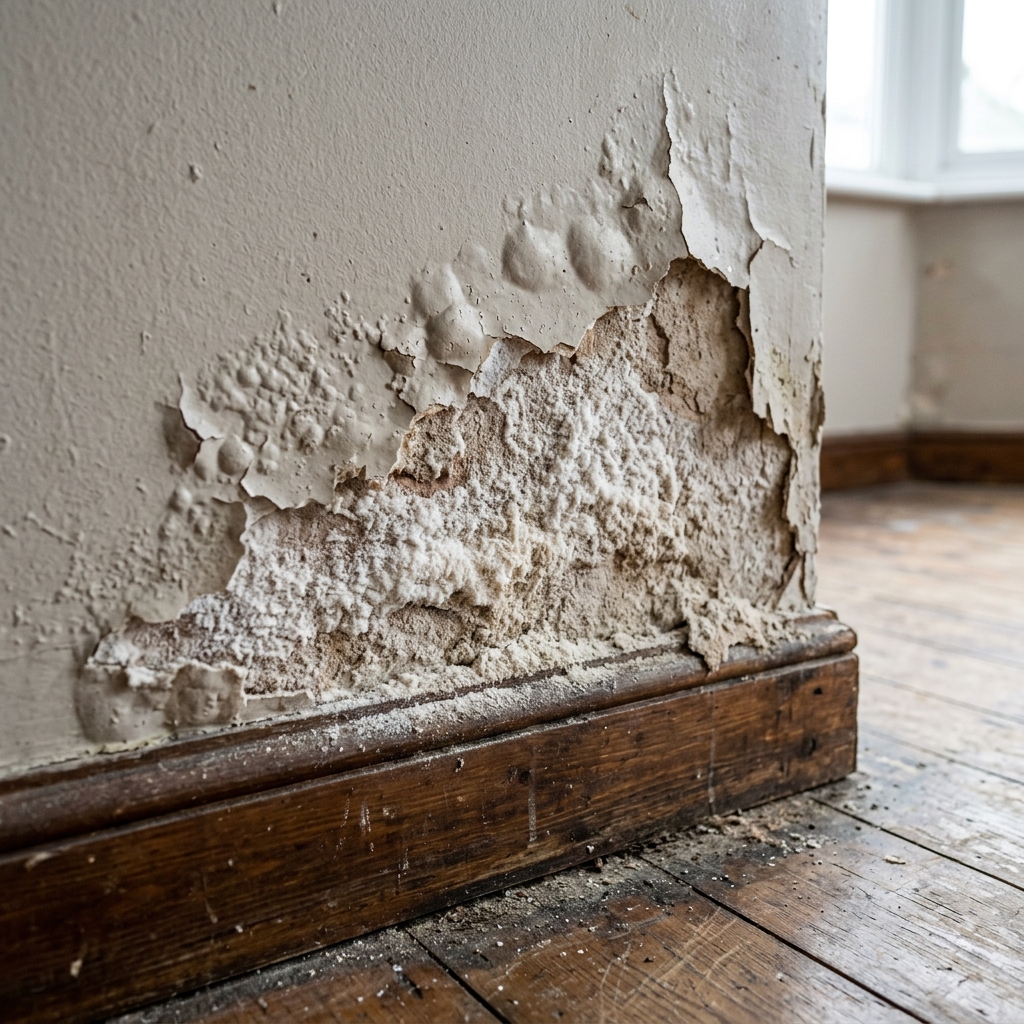
This is the classic signature of rising damp. Capillary action draws groundwater up through the wall, reaching a maximum height before evaporation overwhelms the capillary force. The salts are deposited at this peak height. Because rising damp does not magically migrate upward without a change in the groundwater level, this zone is consistent season to season. If the deposit appears at the exact same height each year, rising damp is almost certain.
White Deposits Near Window or Door Frames
This is a penetrating damp signature. Water is entering through a gap in the external window or door frame sealant, or through a structural crack in the external plaster adjacent to the frame. The shora deposit appears on the interior surface exactly corresponding to the entry point. It typically worsens during or immediately after heavy rain and improves during dry periods. Treatment requires sealing the external entry point first.
Horizontal White Deposit Along Construction Joints
This is a construction joint signature. A cold joint (the weak join between two separate concrete pours) or a plinth beam joint sits at that exact height, and water is tracking along the joint from the outside. This is often seen in buildings where the external plaster has cracked perfectly along the joint line. Treat the external joint crack, then the internal surface.
Brown or Rust-Coloured Staining (Iron Salt Leaching)
This is iron salt efflorescence. It indicates that the reinforcement steel bars inside the wall or slab have begun to rust, and iron salts are dissolving in the moisture flow and appearing at the surface. This is a critical structural warning sign, not just a cosmetic problem. Rust expands within the concrete, causing spalling (breaking away of the concrete). This type of efflorescence warrants an immediate structural inspection, not just a waterproofing treatment.
Fine White Bloom on Newly Plastered Walls
This is new construction efflorescence. Cement plaster contains significant amounts of calcium carbonate. In newly built walls, the first rains draw this calcium carbonate to the surface in large quantities. This is called primary efflorescence and is entirely expected in new construction. It typically reduces after 12–18 months as the initial cement hydration process completes. While it is not a sign of a structural problem, it must be completely neutralised before painting to prevent premature paint failure.
Why “Anti-Shora Paint” and Waterproof Emulsion Do Not Stop Efflorescence
Anti-efflorescence primers and waterproof emulsion paints slow the rate at which salt deposits damage a paint film, but they cannot stop efflorescence because they do not interrupt moisture movement inside the wall. The salt formation happens beneath the paint film - no surface coating can resist crystallisation pressure from behind.
What Alkali-Resistant Primers & Anti-Shora Paints Actually Do
These products use film-forming alkali-resistant binders that successfully resist the chemical attack of alkaline plaster on the paint binder (a process known as alkali saponification). In some advanced formulations, they include micro-porous technology that reduces water vapour absorption. On a mildly damp surface, they will extend the life of the paint film by 12–24 months compared to a standard PVA primer. On a genuinely dry wall with only residual alkalinity from new plaster, they perform exceptionally well.
What Surface Coatings Cannot Do
They are surface coatings. The salt crystallisation that causes shora happens within the plaster or at the exact interface between the plaster and the paint-behind the film. As the crystals grow, they generate immense physical pressure against the paint from behind. The paint film has no mechanical way to resist this force. It will blister and lift regardless of the chemistry of the film itself. Ironically, a thicker film blisters even more dramatically when it eventually fails. A micro-porous film allows the salts to pass through more slowly, but the end result is exactly the same.
The Honest Use Case for Anti-Shora Coatings
Alkali-resistant primer is genuinely necessary and beneficial as a base coat on new plaster, where the primary risk is alkali attack on the paint binder-not active moisture movement. On a freshly plastered wall in a dry, well-ventilated interior room with no external dampness source, an alkali-resistant primer plus two coats of premium emulsion will perform beautifully for 5–8 years. The problem arises when contractors and homeowners apply the same product to actively damp walls and expect it to magically solve an efflorescence problem. It cannot.
The Correct Treatment Sequence
Stop the moisture source first (treat the rising damp, seal the external crack, improve drainage). Neutralise existing salt deposits chemically. Apply the correct substrate treatment (crystalline waterproofing, injection grouting, or DPC injection depending on the moisture type). Then, and only then, apply the alkali-resistant primer and emulsion topcoat. The primer will perform its intended function on a surface that is now genuinely dry.
The Complete Efflorescence Treatment Taxonomy
Permanent efflorescence treatment in Indore requires three sequential steps: removing and neutralising existing salt deposits, treating the moisture source that caused them (using crystalline waterproofing, injection grouting, or DPC injection depending on the dampness type), and then applying an alkali-resistant primer before any topcoat. Skipping any step guarantees recurrence.
Treatment 1: Efflorescence Neutralisation Wash (Always First)
Before any other treatment, existing salt deposits must be removed and neutralised. Wire brushing alone only removes the visible crust, leaving salt residue deep in the pores that will re-crystallise after any new coating is applied. The correct method is to apply a diluted acid wash (a 5–10% hydrochloric acid solution or a proprietary efflorescence cleaner) to the affected surface. Allow it to dwell for 10–15 minutes to dissolve salt crystals, then rinse thoroughly with clean water. Allow the surface to dry completely (minimum 48–72 hours in Indore’s monsoon; 24 hours in post-monsoon dry conditions) before any further treatment. Do not skip this step and go straight to waterproofing-the acid wash is what prepares the substrate for treatment adhesion. (Caution: diluted acid must be used carefully on older lime-based plaster-test a small area first. Professional application is highly recommended.)
Treatment 2: Crystalline Waterproofing (For Rising & Penetrating Damp)
Crystalline compounds react with moisture inside the concrete or brick matrix to form insoluble crystals that permanently block capillary channels. Applied to the bare substrate after the neutralisation wash, this treatment works within the wall, not on its surface, meaning it cannot be pushed off by hydrostatic pressure. Its primary indication is for rising damp or penetrating damp through sound, crack-free masonry. For an in-depth look at this procedure, read our guide on Wall Dampness Treatment.
Treatment 3: PU Injection Grouting (For Active Cracks)
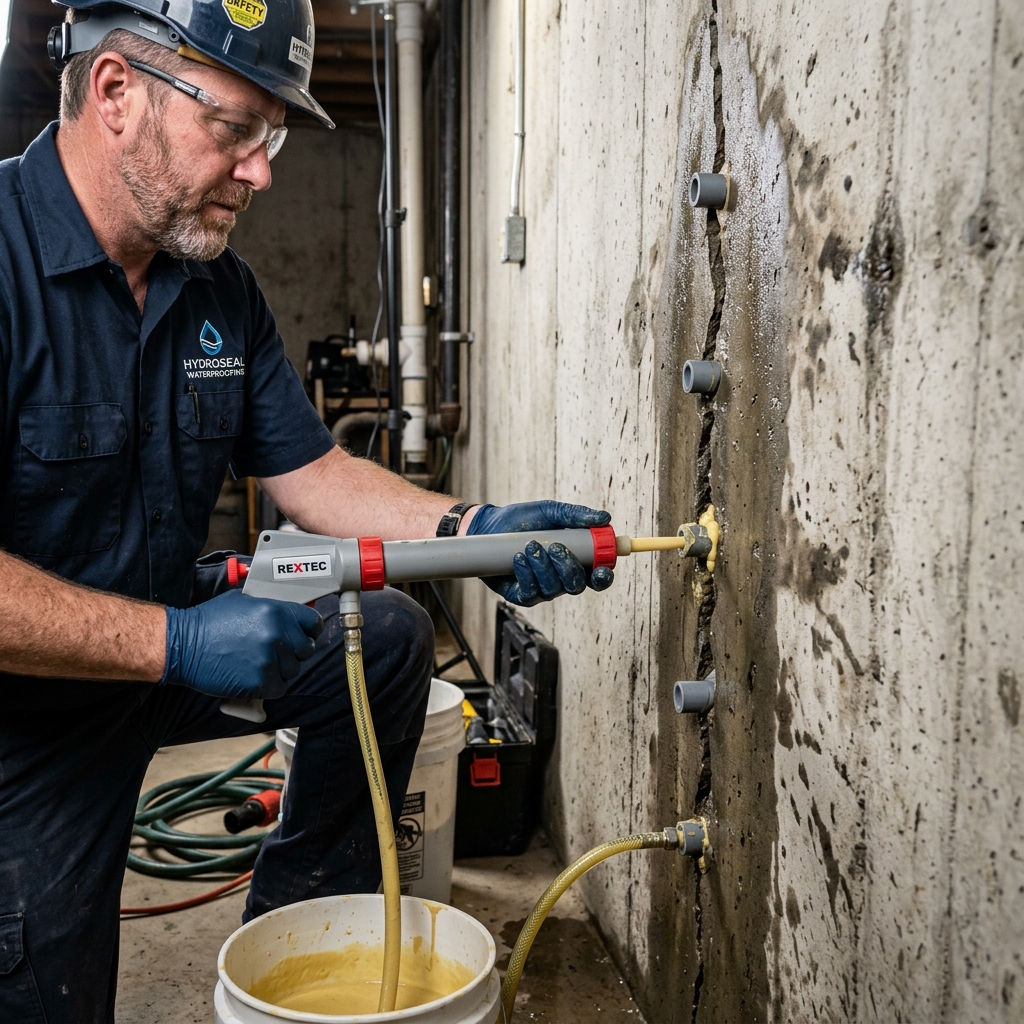
Where efflorescence traces back to a defined structural crack in the wall, injection grouting seals the crack from inside under pressure. This eliminates the moisture pathway permanently. It is important to note that this does not address rising damp through porous masonry-you must use crystalline treatment for that. We discuss this extensively in our Basement Seepage Waterproofing guide.
Treatment 4: DPC Chemical Injection Grouting (For Rising Damp)
In Indore’s pre-1990 bungalows-particularly in areas like Palasia, Manoramaganj, and Old Palasia-many walls were constructed without a physical damp-proof course. DPC injection involves drilling a horizontal row of holes at the base of the wall (typically at 100mm above external ground level) and injecting a silane/siloxane water-repellent chemical under low pressure. The chemical impregnates the masonry pores at that level, creating a chemical DPC barrier that blocks rising moisture. This is a specialist treatment requiring professional equipment and material knowledge. It is not a DIY procedure.
Treatment 5: External Positive-Side Waterproofing
Where efflorescence traces to external crack ingress, the most durable treatment addresses the external wall directly. This includes repointing degraded mortar joints, filling and sealing external plaster cracks with a polymer-modified crack filler, re-sealing window and door frame perimeters with flexible PU sealant, and applying an exterior-grade waterproof render coat on the affected elevation. Internal treatment without external crack repair is only temporary.
Treatment 6: Polymer-Modified Replastering
Once the moisture source has been treated and the substrate is confirmed dry (moisture meter reading within specification), all hacked or weak plaster is replaced with polymer-modified sand cement plaster. Standard gypsum plaster must not be used as a replastering material on a previously damp wall-it is moisture-sensitive and will fail quickly in the same environment. Polymer-modified plaster provides a damp-resistant, stable base for the primer and topcoat.
What Does NOT Work for Efflorescence
- Repainting over existing efflorescence without removing and neutralising the deposit.
- Applying waterproof emulsion directly to a damp wall without treating the moisture source.
- Using white cement to patch efflorescence-affected areas (white cement has a high soluble salt content and will itself effloresce).
- Applying gypsum plaster as the replastering base on a previously damp wall.
DIY Shora Removal: What You Can Do Yourself and What You Should Not
Homeowners can safely remove light efflorescence deposits using a stiff brush and diluted proprietary efflorescence cleaner. However, treatment of the underlying moisture source - crystalline waterproofing, injection grouting, DPC injection - requires professional equipment and material expertise. DIY surface removal without moisture treatment guarantees recurrence.
Safe Tasks for DIY Removal
- Dry brushing light efflorescence deposits with a stiff nylon brush (do not use a wire brush on painted surfaces, as it will scratch the plaster).
- Applying a diluted proprietary efflorescence cleaner (ensure you follow the manufacturer’s dilution ratio, rinse thoroughly, and wear gloves and eye protection).
- Improving external drainage around the property: extending downpipes, clearing blocked surface water channels adjacent to the wall, and grading soil away from the foundation.
- Sealing minor external window frame gaps with readily available PU sealant from hardware stores-specifically for gaps under 3mm in width.
Tasks Requiring Professional Execution
- Hacking and replastering: incorrect preparation damages the substrate for subsequent treatment.
- Crystalline waterproofing compound application: mixing ratios and application consistency are critical for the chemical reaction to work correctly.
- PU injection grouting: this requires calibrated injection equipment; a DIY syringe injection does not achieve sufficient pressure for a full-depth crack fill.
- DPC injection: specialist chemistry and a precise drilling pattern are required; incorrect execution can cause structural weakening.
The Honest DIY Boundary
You can clean the surface and improve drainage-those are meaningful contributions to the health of your home. You cannot, however, stop rising damp or seal a pressurised crack with hardware store products. If the exact same patch of shora returns within one monsoon of your DIY cleaning, the moisture source requires professional treatment.
How Long Does Proper Efflorescence Treatment Last?
When efflorescence treatment correctly addresses the moisture source - not just the surface deposit - results last 5–10 years in Indore’s climate. Crystalline waterproofing lasts 8–12 years in sound masonry. DPC injection lasts 10–20 years. Surface-only treatment without moisture source intervention typically recurs within 12–18 months.
- Surface cleaning and neutralisation only (no moisture source treatment): Recurrence typically happens within 1–2 monsoon cycles. This is the result of the approach most local painters use. Do not treat this as a legitimate, long-term treatment option.
- Crystalline waterproofing on sound masonry (moisture source addressed): This will last 8–12 years in Indore’s climate. It is permanent in the sense that the crystals formed within the substrate do not degrade, but new cracks or new moisture pathways can eventually bypass the treated zone.
- DPC injection grouting: 15–20 years for a well-executed treatment in stable, non-settling masonry. It may need re-treatment if soil conditions or drainage patterns around your home change significantly.
- PU injection grouting for cracks: 5–10 years for a stable crack in a structurally sound wall. If the building continues to settle and the crack continues to open wider, re-injection may be needed sooner.
- Polymer-modified replastering as the final substrate: 8–15 years as a stable base for topcoats, assuming it is properly cured and primed before painting.
The most important factor determining treatment longevity is not the product itself-it is whether the moisture source was correctly identified and treated before the surface was closed up. A ₹60,000 treatment that addresses the source correctly is a 10-year solution. A ₹6,000 treatment that only addresses the surface is a 12-month solution that will simply cost you ₹6,000 again next year.
Frequently Asked Questions
What is the difference between efflorescence and mould on walls?
Efflorescence is white, dry, crystalline, and appears in dry conditions after wet periods - it is a mineral salt, not a biological organism. Mould is green, black, or grey, appears in persistently damp or humid conditions without drying cycles, and has a distinct musty odour. They can coexist but require entirely different treatments.
Why does shora keep coming back every monsoon even after repainting?
Because repainting removes the visible deposit but does not stop the moisture movement inside the wall that produces the salts - the cycle simply restarts with the next monsoon. Permanent treatment requires addressing the moisture source, not the paint surface.
Is efflorescence dangerous to health?
The salt deposits themselves are not toxic or harmful to breathe. However, the persistent wall moisture that causes efflorescence can also support mould growth, which does have respiratory health implications. Furthermore, iron salt efflorescence alongside concrete spalling indicates structural reinforcement corrosion, which is a structural safety concern.
Can efflorescence be permanently removed with a home remedy?
Diluted white vinegar or lemon juice can dissolve light calcium carbonate deposits temporarily, but they do not neutralise the underlying salt reservoir in the masonry and they do not treat the moisture source. Professional efflorescence neutraliser chemicals are more effective at surface removal, but no home remedy treats the structural cause.
What is the white powder on my new construction wall - is it efflorescence?
Yes, it is almost certainly primary efflorescence - a condition common and expected in new buildings where cement plaster is curing. The calcium carbonate in fresh cement leaches to the surface with initial moisture exposure. It typically reduces after 12–18 months. Paint should not be applied until the primary efflorescence cycle is complete and the wall has been chemically neutralised.
Does efflorescence mean my waterproofing has failed?
Not always - in new construction it occurs before any waterproofing was expected to be needed. In older buildings, yes - persistent efflorescence at foundation level or at construction joints usually indicates that either the original waterproofing has degraded or was never applied in the first place. In these cases, professional diagnosis is warranted.
Conclusion: The Right Approach to Shora in Indore
In my 45 years of waterproofing and painting in Indore, the single most common and most preventable problem I see is homeowners repainting over shora without treating the moisture source. This happens not because they are careless, but because no one explained the cycle to them. Their painter did not explain it. The hardware store did not explain it. This post is the explanation. If you stop the water, you stop the shora.
If you see shora on your wall, three simple questions determine your treatment path: Where exactly is it (base of wall, near a window, or mid-wall along a horizontal line)? Has it appeared before, and at the exact same location? Is there any corresponding mark or stain on the external wall at the same point? The answers map directly to the three moisture types and the three treatment approaches I have outlined here. From terrace leaks to bathroom seepage, locating the origin is the only way to formulate a cure.
If you are in Indore and the shora on your wall has returned for the second or third time, the moisture source has not been addressed. We offer a free site moisture assessment - we bring a digital moisture meter, scan the affected wall, and tell you honestly what is causing it and what it will cost to treat it correctly. WhatsApp 070672 58993 or visit our showroom in Pipliyahana.

About the Author: Rajesh Vishwas
Rajesh Vishwas has been a leading figure in Indore’s painting and waterproofing trade since 1980. With 45 years of hands-on experience dealing with the city’s unique climate challenges, Rajesh specializes in diagnosing and permanently resolving complex seepage, dampness, and efflorescence (shora) issues across Indore’s residential and commercial properties.