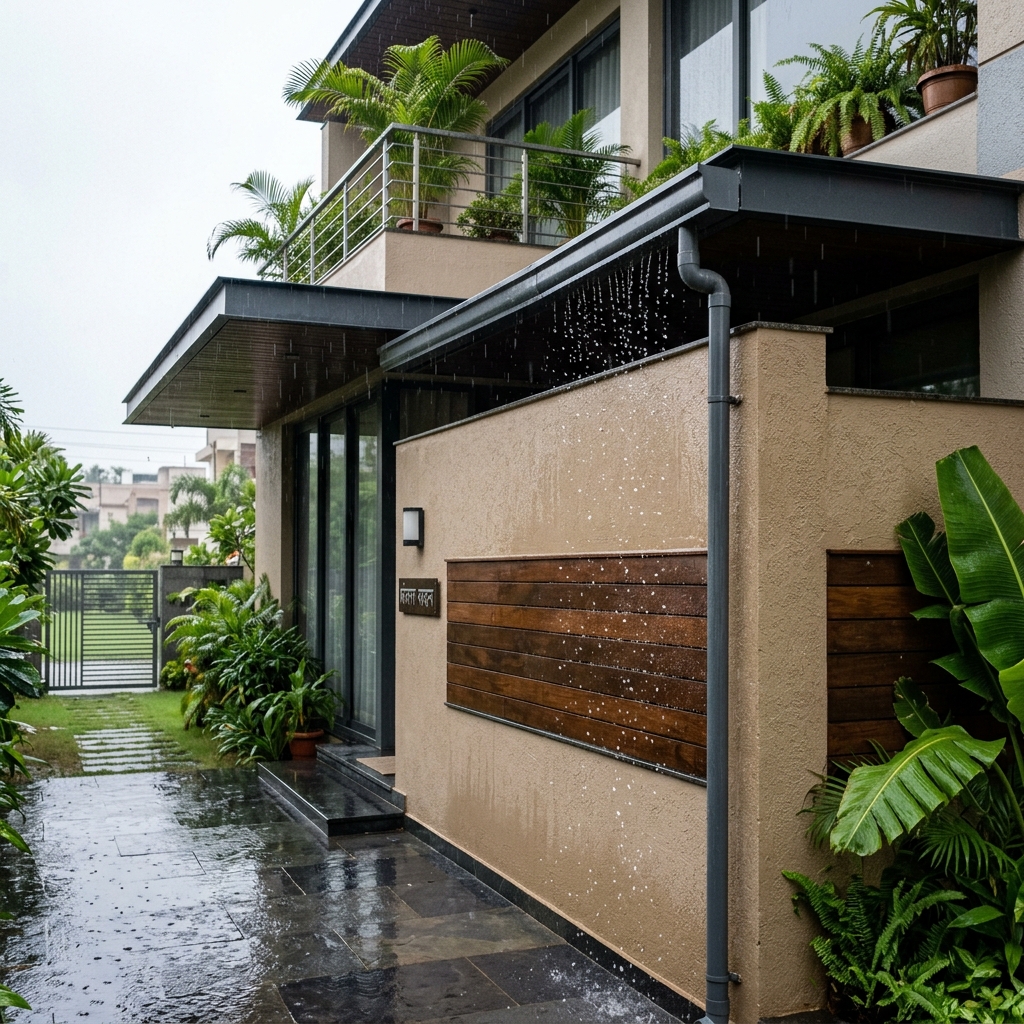
As property owners in Indore, we invest heavily in stunning architecture, premium paints, and luxury interior decor, often completely overlooking the one element that protects it all: structural water defense. Continuous exposure to the intense Malwa summer heat followed by aggressive monsoon rainfall creates severe thermal expansion, slowly fracturing concrete and weakening construction materials.
What begins as a seemingly harmless terrace leak or a minor damp patch on an exterior wall can silently compromise the entire structural integrity of your building. Understanding how large-scale waterproofing systems function is the key to preserving your property’s value for generations.
What Does Building Waterproofing Mean for Structural Safety?
Building waterproofing means establishing an impenetrable chemical barrier that stops moisture from penetrating porous concrete and masonry. This defense is critical for structural safety because it prevents internal steel reinforcement from rusting, expanding, and permanently weakening the building’s core load-bearing elements.
Waterproofing is far more than just a surface-level coat of paint; it is a highly systematic engineering method. Concrete naturally absorbs water like a sponge. Once moisture breaches the outer layer and reaches the iron rebars inside your pillars and slabs, the metal corrodes and pushes outward. This destructive process, known as concrete spalling, can only be prevented by an integrated, multi-layered waterproof membrane.
What Are the Common Reasons Buildings Develop Leakage Problems?
Buildings develop leakage problems primarily due to intense thermal expansion that creates microscopic cracks in concrete over time. Additionally, poor architectural terrace slopes, aging construction materials, and the continuous exposure of exterior walls to aggressive monsoon rains allow water to saturate the structure deeply.
Water leakage rarely happens overnight. It develops gradually due to relentless environmental exposure. In many buildings, plumbing lines concealed within kitchen and bathroom walls create hidden seepage paths that remain unnoticed for years until the exterior plaster begins to peel and crumble.
What Are the Benefits of Professional Building Waterproofing in Indore?
The benefits of professional building waterproofing in Indore include dramatically extending the overall lifespan of the structure and neutralizing the risk of concrete spalling. A fully sealed building also prevents toxic mold growth, improves indoor air quality, and preserves the property’s long-term market value.
Attempting to fix structural dampness with cheap tar paints is a false economy. Professional waterproofing delivers massive long-term advantages:
- Structural Stability: Protects critical load-bearing foundations, walls, and slabs from moisture-induced corrosion.
- Health and Hygiene: Eliminates dampness and musty odors, completely stopping the growth of toxic black mold.
- Financial Savings: Lowers massive future maintenance costs by stopping recurring leakage and avoiding frequent patchwork repairs.
- Asset Value: Preserves the building’s pristine exterior appearance, making it significantly more attractive to premium buyers and commercial tenants.
What Are the Different Types of Waterproofing Applied Across Buildings?
The different types of waterproofing applied across buildings include rigid cementitious coatings for older foundations, highly flexible elastomeric membranes for exposed terraces, and specialized epoxy injection systems for basements. The correct choice depends entirely on the specific structural zone and its exposure to moisture.
A building is a complex structure, and no single chemical treatment works perfectly for every area. Modern waterproofing requires a highly targeted, zoned approach:
| Building Zone | Moisture Challenge | Recommended Waterproofing Solution |
|---|---|---|
| Terrace & Roof | Direct UV exposure, thermal cracking, and heavy rain. | Highly flexible Polyurethane (PU) or Elastomeric Liquid Membranes. |
| Wet Areas (Bathrooms) | Constant internal water usage and concealed pipe leaks. | Polymer-modified cementitious coatings and epoxy grouting. |
| Basements & Foundations | Severe soil moisture and hydrostatic groundwater pressure. | Exterior crystalline coatings and interior epoxy crack injections. |
| Exterior Walls | Wind-driven monsoon rain and rapid temperature shifts. | Breathable, UV-resistant acrylic elastomeric waterproof paints. |
Why Is Waterproofing Critical for Commercial Building Projects?
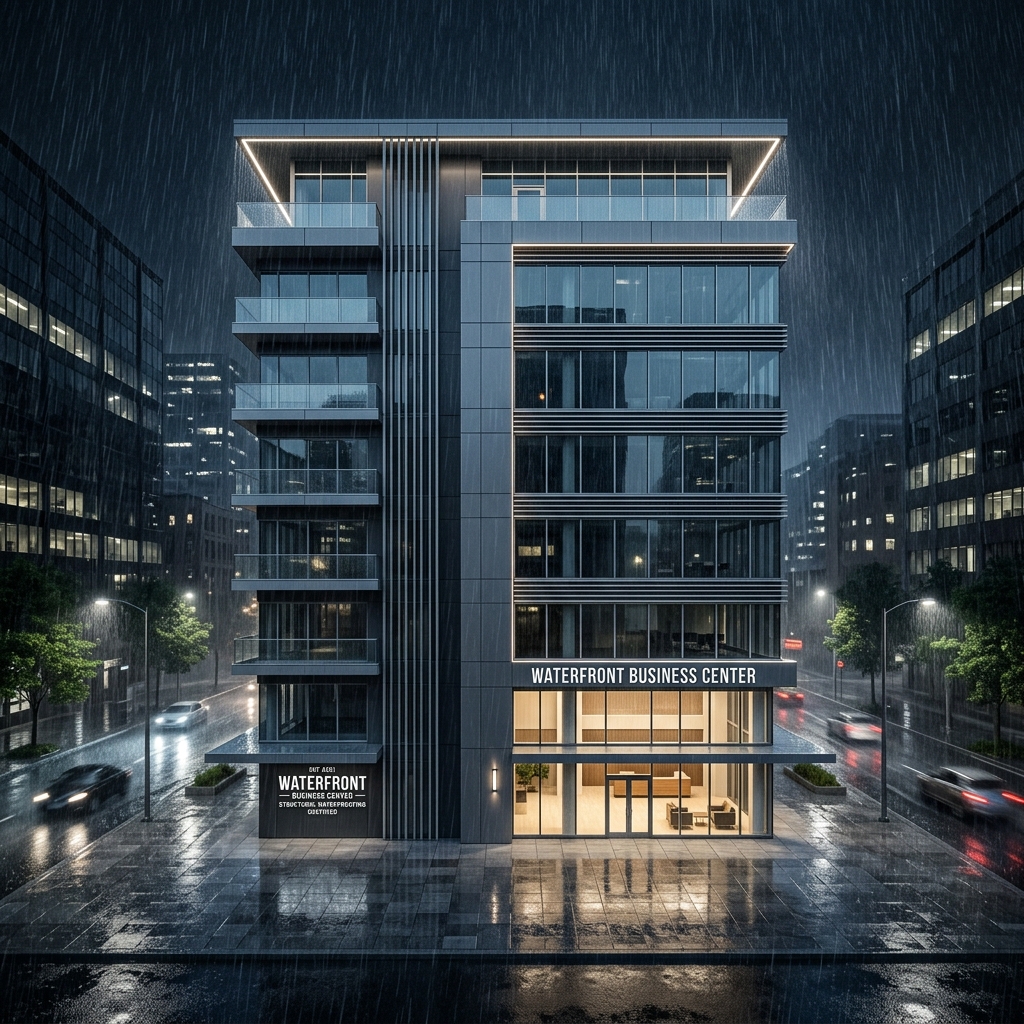
Waterproofing is critical for commercial building projects because structural leakage causes severe operational disruptions, damages expensive inventory, and creates massive safety liabilities. Premium, heavy-duty elastomeric treatments ensure that large-scale facilities remain completely watertight and functional, even during extreme weather conditions.
Offices, residential societies, underground parking arenas, and retail spaces experience immense load stress. A leaking ceiling in a commercial server room or a flooded retail basement can result in losses running into the millions. Commercial buildings require heavily coordinated wall, terrace, and basement protection protocols that prioritize absolute longevity over initial cost.
What Is the Professional Waterproofing Execution Process?
The professional waterproofing execution process begins with a meticulous structural audit to identify hidden seepage paths. Technicians then grind and clean the concrete, inject epoxy into active fractures, and apply multiple layers of advanced liquid membranes before conducting a rigorous water-ponding test to verify the seal.
Successful waterproofing is entirely dependent on surface preparation. If the concrete is dusty, oily, or flaking, even the most expensive chemical membrane will peel off.
If your property is currently facing severe structural seepage, don’t wait for the damage to spread. Explore our expert waterproofing services in Indore to schedule a comprehensive structural assessment today.
Frequently Asked Questions
What are building waterproofing solutions?
Building waterproofing solutions are engineered chemical treatments that protect structures from moisture penetration, deep seepage, and rising dampness. By creating an impenetrable barrier, they prevent concrete cracking, steel corrosion, and toxic mould growth, thereby improving the overall durability of the property.
Why is waterproofing important for commercial buildings?
Waterproofing commercial structures is critical because these massive surfaces face constant, aggressive weather exposure. Proper elastomeric systems prevent severe business disruption, safety liabilities, and costly inventory damage, ensuring long-term operational stability for offices, luxury societies, and retail properties.
What factors affect building waterproofing costs?
Waterproofing costs depend on the total square footage of the building, the severity of the active structural damage, and the specific chemical membrane selected. While professional, multi-layered solutions require a higher initial investment, they completely eliminate the need for endless, frustrating patchwork repairs.
Why is building foundation waterproofing necessary?
Foundation waterproofing protects the base of the structure from aggressive ground moisture and intense hydrostatic pressure. It prevents deep cracking and rising dampness that can permanently weaken structural walls, extending the building’s lifespan significantly.
Why is building terrace waterproofing important?
Terraces face extreme, direct sunlight and torrential rainfall. This thermal shock creates microscopic cracks in the slab that allow rapid water seepage. Professional terrace protection prevents ruined ceilings and interior dampness, ensuring the concrete slab remains rock-solid for decades.

About the Author: Vishwas Home Team
The Vishwas Home Team is a collective of structural engineers, certified applicators, and waterproofing specialists based in Indore. With decades of hands-on experience in resolving deep-rooted seepage problems, the team is committed to providing homes with permanent, inspection-led waterproofing solutions using the industry’s highest quality branded materials.